

Gold Is Booming — But Where Will the Next Generation of Gold Mines Come From?

Introduction
Gold is once again commanding the attention of the global mining industry.
Investors are watching it.
Governments and central banks are watching it.
Mining companies are investing in it.
And across some of the world's most prospective geological regions, exploration companies are searching for the deposits that could become the next generation of gold mines.
But there is a problem.
Existing gold mines cannot produce forever.
Ore bodies are depleted. Grades change. Mines become deeper. Operating costs increase. And eventually, every producing mine needs to be replaced by another discovery.
That means the current strength of the gold market is about more than the price of an ounce of gold.
It is creating another question for the mining industry:
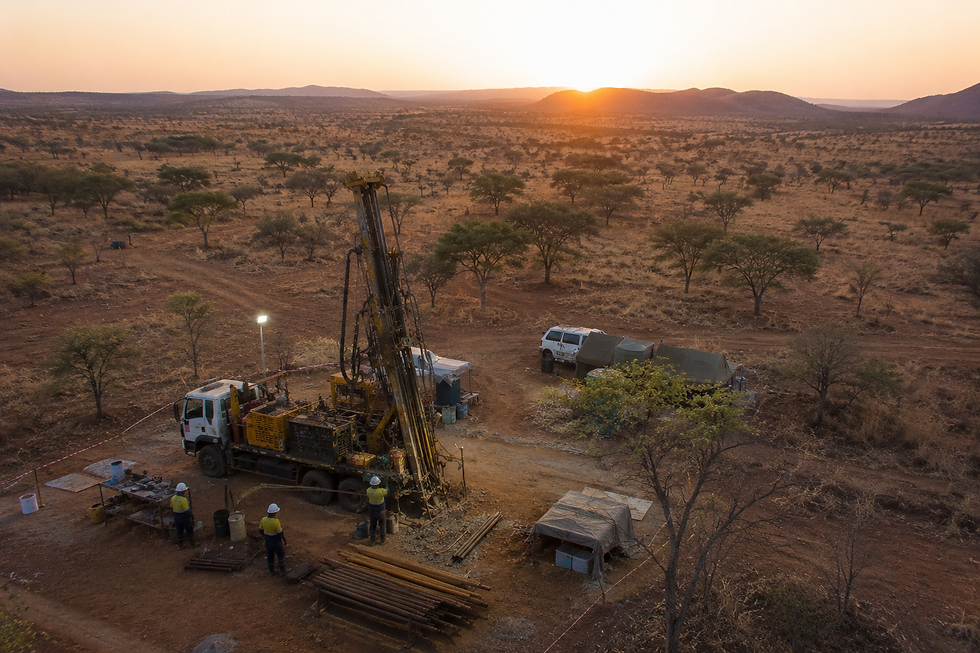
Where will the next generation of gold mines come from?
The answer starts with exploration.
And exploration eventually means drilling.
Gold Has Become Strategically Important Again
Gold has occupied a unique position in the global economy for thousands of years.
It is simultaneously a commodity, investment asset, monetary reserve and industrial material.
During periods of economic uncertainty, geopolitical instability and currency concerns, investors have historically turned toward gold.
Central banks also continue to hold significant gold reserves.
But unlike financial assets, gold cannot simply be created digitally.
Every new ounce entering the primary supply chain ultimately has to be physically mined from the ground.
That makes future mine supply extremely important.
Existing Gold Mines Need Replacing
Mining companies face a challenge that exists regardless of commodity prices:
Every mine has a finite life.
Once an ore body has been extracted, another resource needs to replace it.
Companies can extend mine life through additional drilling around existing operations, but ultimately the industry also needs entirely new discoveries.
That creates two major areas of exploration activity.
Brownfield Exploration
Brownfield exploration takes place around existing mines and known mineral systems.
Companies drill deeper or farther from existing resources looking for extensions to mineralisation.
These discoveries can be extremely valuable because infrastructure may already exist nearby.
Greenfield Exploration
Greenfield exploration is the search for completely new deposits.
It carries greater geological risk but also offers the possibility of discovering entirely new mining districts.
Both require drilling.

The Easy Gold Deposits Are Becoming Harder to Find
Many historically important gold discoveries had obvious geological indications at or near the surface.
Future discoveries may be different.
Exploration companies increasingly need to search:
Beneath transported cover
Below existing deposits
In remote jungle environments
Across deserts
In mountainous terrain
In underexplored jurisdictions
Hundreds of metres below surface
The geological opportunity remains enormous.
Finding it is becoming more technically demanding.
The Next Gold Discovery Could Be Hidden
This is where modern mineral exploration becomes particularly interesting.
A major mineral system does not necessarily need to be visible at surface.
Modern exploration companies combine multiple technologies to identify targets.
These include:
Geological mapping
Soil sampling
Geochemistry
Magnetic surveys
Induced polarisation
Electromagnetic surveys
Satellite imagery
Structural interpretation
Three-dimensional geological modelling
All of these techniques can improve the probability of identifying a target.
But ultimately there is only one way to determine what is actually beneath the ground.
Drill it.

Diamond Drilling Is Critical to Gold Exploration
Diamond drilling remains one of the most important tools available to gold explorers.
The process produces continuous cylindrical rock core from beneath the surface.
That core provides geologists with an enormous amount of information.
They can examine:
Mineralisation
Veining
Alteration
Geological contacts
Structural orientation
Rock quality
Faulting
Core recovery
Samples can then be sent to laboratories for assay.
This allows exploration companies to begin building a three-dimensional understanding of the mineral system.
As targets become deeper and more complex, good-quality diamond drilling becomes even more important.
RC Drilling Can Accelerate Gold Exploration
Reverse circulation drilling also plays an enormous role in gold exploration.
Rather than recovering continuous core, RC drilling returns rock chips to the surface using compressed air.
It can provide an efficient method for rapidly testing large numbers of targets.
RC drilling is commonly used for:
Early-stage gold exploration
Resource definition
Infill drilling
Grade control
Target testing
For many projects, RC and diamond drilling complement one another.
RC can rapidly test a mineralised system.
Diamond drilling can then provide detailed geological and structural information.
Exploration Is Moving Into Frontier Regions
Some of the greatest opportunities for future gold discoveries may exist in regions that historically received less exploration investment.
This is particularly important across parts of:
West Africa
Central Africa
East Africa
South America
Central Asia
Southeast Asia
The Pacific
These regions contain enormous geological potential.
But operating there can also introduce challenges that have little to do with geology.
Remote Gold Exploration Is a Logistics Operation
Anyone who has actually operated a drill rig in a remote location understands that drilling is only part of the job.
The rig needs fuel.
The mud pump needs water.
The crew needs food.
Drill rods need moving.
Core needs transporting.
Consumables need replenishing.
Mechanical parts need to be available.
Equipment needs servicing.
And sometimes the entire operation is hundreds of kilometres from the nearest major town.
In extreme environments, access may involve helicopters, boats, temporary roads or purpose-built support vehicles.
That is why successful remote exploration requires more than simply purchasing a drill rig.
It requires an operational system.
A Drill Rig Is Only the Start
This is something the exploration industry occasionally underestimates.
A powerful drilling machine is important.
But it will not produce metres without the infrastructure surrounding it.
A productive exploration programme requires:
Experienced drillers
Competent offsiders
Mechanical support
Correct drilling consumables
Drilling fluids
Spare parts
Water management
Fuel management
Logistics
Preventative maintenance
Strong supervision
If one part of that chain fails, drilling stops.
And when an exploration rig stops in a remote location, downtime can become extremely expensive.
Experience Matters When Ground Conditions Change
No two holes are identical.
Ground conditions can change dramatically within metres.
A drilling crew may encounter:
Broken formations
Fractured rock
Clay
Cavities
Water loss
High water inflow
Swelling formations
Unstable holes
The drilling plan must adapt.
Experienced drillers understand that production is not simply about pushing the rig harder.
Sometimes protecting the hole and maintaining stability is more important than chasing metres.
The objective is not simply to drill quickly.
The objective is to successfully reach the geological target and recover the information the exploration company needs.
Deeper Gold Targets Change the Equipment Requirement
As exploration moves deeper, equipment selection becomes increasingly important.
A drill rig operating at 100 metres faces very different demands from a machine drilling several hundred metres below surface.
Depth increases requirements around:
Pullback capacity
Rod handling
Mud circulation
Water management
Hole stability
Pump performance
Mechanical reliability
Selecting equipment purely around the planned target depth can therefore be a mistake.
A drilling rig should have sufficient additional capacity to deal with changing ground conditions and operational challenges.
In exploration drilling, additional capability provides operational flexibility.
Mobility Is Becoming More Important
Exploration programmes rarely involve one hole.
A rig may need to drill dozens—or hundreds—of targets across a project.
Every move costs time.
For remote programmes, mobility can therefore have a major influence on total exploration costs.
This is one reason CED has increasingly focused on modular and mobile exploration drilling systems.
The objective is not simply to build a machine capable of drilling.
It is to create equipment that can be efficiently deployed, supported and moved throughout an exploration programme.
CED: Equipment, People and Operations
At Cylinder Exploration Drilling (CED), we believe supplying the drilling rig should only be the beginning of the relationship.
CED provides equipment for:
Diamond drilling
Reverse circulation drilling
Air core drilling
Underground diamond drilling
Water well drilling
Remote exploration
But equipment alone does not guarantee a successful programme.
CED can also provide:
Experienced drillers
Drilling supervisors
Mechanical fitters
Exploration support personnel
Consumables
Drilling muds
Compressors
Spare parts
Operational management
This allows clients to build complete drilling capabilities rather than sourcing every component from separate suppliers.
Gold Exploration Could Accelerate
Strong gold markets can fundamentally change exploration economics.
Targets that were previously marginal may receive another look.
Existing projects may receive additional drilling budgets.
Junior exploration companies can attract new investment.
Producers may increase brownfield exploration around existing operations.
And new jurisdictions can begin attracting international exploration capital.
But increased budgets alone do not create discoveries.
Those budgets need to translate into metres drilled.
Every Major Gold Mine Started With an Exploration Decision
Before the processing plant.
Before the haul trucks.
Before the open pit.
Before the underground development.
Before the first gold bar.
There was exploration.
Someone studied the geology.
Someone identified an anomaly.
Someone selected a target.
And eventually:
Someone drilled the hole that proved the mineralisation was there.
That is why exploration drilling remains one of the most fundamental parts of the entire mining industry.
The Next Major Gold Discovery Could Be Anywhere
The world's next significant gold discovery could be beneath an established mining district.
It could be beneath hundreds of metres of cover.
It could be deep in an African gold belt.
It could be in the mountains of Central Asia.
It could be beneath tropical jungle.
It could be somewhere the mining industry has barely explored.
We simply do not know yet.
And that is precisely why exploration exists.
Final Thought
Gold may be booming.
But high gold prices do not automatically create future gold supply.
The mines producing today were made possible by exploration decisions taken years—or even decades—ago.
If the world wants the next generation of gold mines, exploration companies need to find them now.
That means geological mapping.
Geophysics.
Target generation.
Investment.
Experienced exploration teams.
And ultimately, drilling.
As the easiest deposits become harder to find, exploration will move deeper and farther into challenging environments.
The companies capable of operating effectively in those conditions will help define the next generation of mineral discoveries.
Because long before a gold mine produces its first ounce, somebody has to put the first drill hole into the ground.


Comments